Another Message coming through on the Tight Beam relay network, stand by to receive the incoming message. While it loads, take this opportunity to subscribe to get access to the archived messages and receive future updates.
If you haven’t seen anything from Pending Receipt before, go back to chapter one to avoid spoilers, or if you missed last episode, go back to chapter 17 to catch up.
18
Workspace
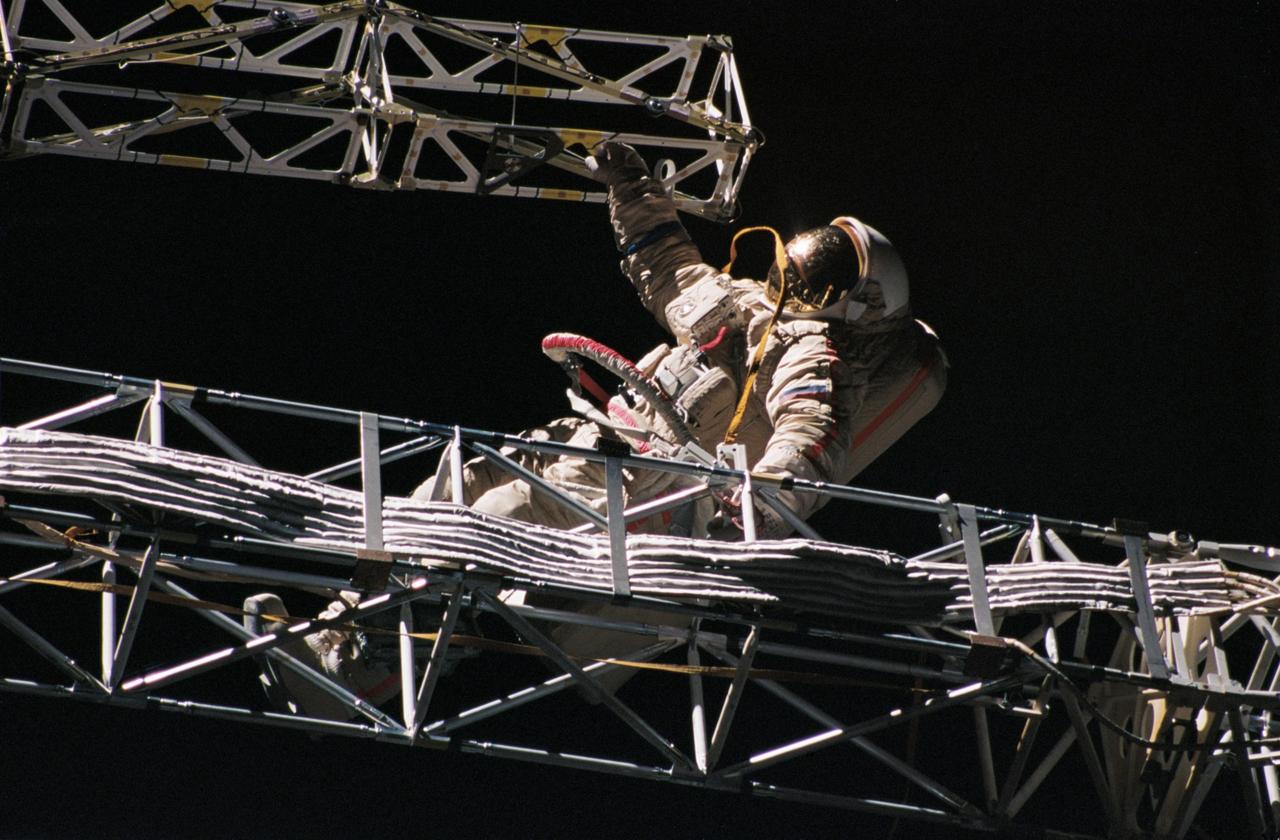
Grunting as he hauled on the end of the cable, Lev’s breath fogged the inside of his helmet. He was working so hard that the environmental controls couldn’t keep up, unable to wick away all the humidity from his now sweaty body. He heaved one last time, and then stopped for breath, feet planted wide, hooked into nylon loops on the side of the umbilical. This meter and a half diameter, three hundred meter long structural member mounted the cylindrical space station colony known as Langok to the bow of the star ship Stalingrad, which served as the tug boat across the galaxy from earth to the distant star still known only as Kepler 452B.
Lev twisted at the waist to look back, for the bulky spacesuit prevented him from looking over his shoulder. Nearly eight hours into his spacewalk, he only had about twenty meters left. With help from two of the colonists, Spring and Kirk, on the spacewalk with him, they had strung an extra high voltage power cable down the length of the umbilical. Putting insulation over the cable and mounting it with plastic standoffs that the colonists had made with additive manufacturing. Lev winced through his exertion, trying to look past the angry purple of the transit dimension into the faceplate of Kirk’s helmet. Kirk gave him the thumbs up sign, asking him if he was okay. Lev shook his head no, but returned the thumbs up. Static chirped in his helmet, and he rolled his eyes. Cheif Engineer Konstantin’s voice came in his headset, for the ten thousandth time on this spacewalk. “How’s it going down there, Lev? How are you holding up in the transit dimension?”
Lev glanced through the faceplate of his pressure suit at the other two spacewalkers who had been with him for the duration of this exercise. He keyed his mic only halfway, trying to contain his exacerbation and exhaustion. “I’m fine, chief, just like I was when you checked in ten minutes ago. No I am still not done.”
“The bridge crews have reported mixed symptoms after visual exposure to the phenomenon of the transit dimension. I just want to make sure you’re doing okay. Because if we have to pull you out it’ll take some time to get someone else suited up and out there, and that’s time we can’t afford to spare.”
“If you’re that worried about me, why don’t you already have someone else suited up and on standby to fill in for me?” Lev grunted in reply, hefting the cable, so Kirk could wrap the next section of sleeving around it.
“We do.”
“You’ve had someone on standby this whole time, and not had them swap out with me? I’ve been working on my own for how long now? And not gotten any breaks at all?”
“There’s no guarantee that they wouldn’t have adverse effects if exposed to the visual stimuli too.”
“So have them open the hatch and look outside to see if they get a headache or not.” Lev offered over the radio as he waved to Spring, she clipped the standoff onto the cable over the insulation Kirk had installed.
“It’s not that simple Lev, we can’t risk it.”
“Risk it? A migraine might suck, might make you nauseous, but it never killed anyone. We’re on a time crunch here and more help might save us.”
Lev knelt down, pulling the screw gun, now on its third battery pack, from his belt. He used it to loosen the screws in the paneling so he could mount the standoff in there. “Well, Toya did more than throw up. She passed out, we’ve not been able to revive her.”
“She what? Why?”
“She’s in a coma, Lev. And we’re not sure why. No one else has had a reaction this acute to exposure to the transit dimension, but many have had headaches, nosebleeds, nausea, and similar symptoms to varying degrees. If an involuntary response can be that powerful, we can’t risk it happening to someone else, not if we don’t have to. If you’re feeling fine, we need you to keep going. We all need you to keep going. I’m sorry you’re tired, you’ll get a good rest once the job’s done and you’re back aboard Stalingrad.”
Lev paused, his hands and tools hovering centimeters from the hardware. “Coma?”
“Yes. Now you understand, we’re not just all counting on you, but we’re all counting on YOU.” Lev looked up to the two spacewalkers with him, their faces barring questioning looks through their helmets. Kirk asked him the thumbs up question again. He looked away, pretending not to have seen it, and ran the screws back in, securing the mount to the umbilical.
“I’m on it chief. Still going, still good.” He replies, trying to keep his voice steady and soothing. Trying to reassure the chief engineer as much as himself.
Kirk and Spring changed the channel they were talking on, including Lev in their conversation. “Why do you think it’s that color?” Kirk was asking.
“I don’t know, it’s kinda pretty though, don’t you think?” Spring’s high whine of a voice replied.
“Pretty? It hurts to look at, it makes my eyes itch.”
“Well I like purple.” She replied.
“Hey!” barked Lev, “This isn’t the time for chitchat, we’re almost done, and time is still a factor. Why doesn’t one of you go get the access panel open? It shouldn’t take two people to hold the remaining insulation and standoffs.”
Kirk and Spring exchanged glances through their helmets, exchanged nods, and then Spring handed over the last three standoffs to Kirk before she turned and made her way to the panel. “We understand the situation, man, but there’s no reason to get all bent out of shape about it. It’s not like we can work faster. There’s only so many hands here, and with this kind of work, adding more people won’t make it go faster.”
“So you’re going to gossip about this godforsaken alternate dimension? Babble on about color? Why does it matter if the default setting’s color here is purple instead of black? We’re trying to leave here, to get away from this awful place.”
“Why not? Think about it man, we’re in a whole other dimension, sure other people have been here before, but not many, and no one has studied it much, not the way we’ve been studying the MilkyWay, this is a whole different galaxy man.”
“I think it’s technically a different universe, not a galaxy.” Lev replied as he leaned back in the foot straps, using his body weight to haul on the cable, holding up its end for Kirk to slide the insulation on over it, working even slower with one hand as he struggled not to drop the other pieces.
“Yeah, I guess it is. That doesn’t mean we have to feel bad about it though.”
“Feel bad about it? I’m just asking for the work to get done. Because our lives, the ship, the colony, and everyone else’s lives depend on it too. Depend on the three of us, and this cable, and getting it hooked up to that panel over there.”
“Yep.”
“Yep? Yep? You can’t be that casual about it.” Lev said as he set about loosening the next set of screws for the next standoff.
“Why not? You’re letting the pressure get to you, man. You can’t whistle or have a conversation while you work? What happened to your whimsy, man?”
Lev stopped, dumbfounded with a fistful of loose screws while Kirk clipped the standoff on, over the insulation on the cable. “Whimsy?”
“Do you have no wonder left? I mean, look at this? All this strange purple, or look over there, look at that big white thing, it looks like a lightning bolt, but who knows how far away that is. Is it a mile long, a light year long?”
Lev didn’t look at whatever he was pointing at, he started screwing the standoff back down to the trunk of the umbilical, the whir of the screw gun’s electric motor echoing hollowly inside his pressure suit. “What are you five years old? Where’s your sense of urgency?”
“Feeling bad about it isn’t going to change it man. Might as well enjoy the ride while we’re here.” Kirland replied, his torso leaned back so he could look up at the surrounding purpleness. Lev yanked on the cable again. “One more.” he grunted to himself inside his helmet as he turns to measure the distance between himself and the panel that Spring now had almost finished opening.
“So, this travel dimension doesn’t interest you at all?” Kirk asked.
With the cable held taut, Lev gestured for Kirk to slide on the last section of insulation.
“I’m curious how we can get out of it,” Lev specified. “I don’t want to be here on a permanent basis.”
“Still? Nothing? The sky is purple man, that’s wild, how do you not have the least bit of interest? Like, what school did you go to? Was all the fun beaten out of you?”
“I don’t think school had anything to do with it, perhaps more like that we’re trapped in an alternate dimension, and if we don’t do this, quickly and correctly, that will be a permanent ailment.”
Kirk slid on the insulation over the stubby remaining end of the cable. “Relax man, no one wants it to be permanent.”
Lev let go of the cable, letting it flop in the other man’s grip. “No, I wont relax. This is serious. It should be treated seriously. There’s too much riding on this.” He stood up straight, throwing an accusatory finger out, pointed directly at Kirkland’s chest. “You need to focus, so we can get this done right.”
Kirk turned sideways, waving an arm out back down the length of the umbilical between the ship and the colony. “Done right? Have we been doing this whole thing wrong? Man I don’t know if it’s possible for us to work harder than we have been, we’ve made good time.”
“I’m not sure if I could work harder without passing out inside my suit, but I’m sure you could have been working harder, yet you’re still standing around, gawking.” Lev said, his volume increasing.
“Chill man, sounds like you need to relax more. Sure it’s always possible to work harder, but have you ever heard of economy of effort? The closer you get to one hundred percent the more it takes to get to it. What do they call that again, the eighty twenty rule? Twenty percent of the work will get you eight percent of the way?”
‘Twenty percent of the effort?” Lev’s eyes bulged. “This is a mission critical problem, this is the text book definition of when we need maximum effort!”
“We’re basically done at this point, so your argument is moot to begin with. Second of all, we’ve done just fine thus far, there’s no reason to get on my case about it now.” Kirk let the cable go, the insulation installed, and straightened, squaring up to face Lev.
“That’s no excuse, it’s negligence! Just wait until the Governor hears about this.”
“The Governor?” Kirkland scoffed. “Who do you think picked me, sent me out here, specifically me, for this specific job man? You might do stuff the hard way on the Stalingrad, but we do stuff the right way on Langok.”
“The right way?” Lev shouted at him inside his helmet. “What do you mean the right way?”
“I’m just saying man, this whole problem is because of the Stalingrad’s reactor, isn’t it?”
Lev stepped closer to Kirk, their helmets nearly touching as the two men stared daggers at each other through the faceplates of their helmets. As the moment drug on, and Lev debating on making something of the exchange, Spring intervened.
“Boys, boys. You’re both big and smart and know a what you’re doing.” She took the last standoff from Kirkland’s hand. “But we’re not done yet, and standing here thinking with your words, instead of doing with your hands, isn’t going to get it finished.” She took the screw gun from the clip on Lev’s waist, and started loosening the hardware for the last standoff herself. “You can prep the end of the cable for termination.” she commanded.
Lev incredulous, turned to watch her. “Who put you in charge?”
“She’s always been in charge.” Kirk chuckled, all the tenseness already gone from him. Lev glanced back and forth between them bewildered as Spring secured the final stand off in place.
“Well, you going to work hard like you were talking about, or you just going look at petit girls all day?” Lev and Kirk exchanged looks, and Lev pulled the tool kit from the other mount on his belt and opened it, looking for the wire strippers.
Kirk shrugged inside his suit as Lev hooked an arm through a toe loop, pulling himself down closer to the panel. “She is kinda funny looking in this purple light anyway.” They chuckled.
Now that the message has been delivered, here’s the updates on the next book release. Many long delayed beta readers are getting their feed back to us. So while nearly complete, edits have halted while we cross check things, to make sure none of their suggestions were missed in previous editing passes. The cover art has also been sent off to get it professionally scanned. We only use hand painted analog art for our covers, that way you know it’s not AI. NSC is 100% committed to non- slop art. It may seem like everything is a delay, but every delay is just time for refinement. We’re committed to only giving you the best we can. You can’t rush art. Thank you for your patience and support as we work to give gritty, real literature that doesn’t have to go through the mainstreams list of checkboxes before release.
Back Scatter
In this new to Tight Beam segment, we’re going to let our resident author Chace go off the rails. If you haven’t seen them before, he did a long running series of YouTube shorts, quick break downs of obscure fighter planes, lesser known missions from during the space race, incidents from the cold war, and just generally “weird stuff the Soviets did in the 80’s”. Well now we’re bringing that same energy, that same information here, in a text based format. There’s a massive list of topics he want’s to cover, beyond the ones already done in videos. If he ever gets board, maybe we’ll make him revisit those too. A lot more can be said in a five hundred to one thousand word article, than in a fifty five second YouTube video.
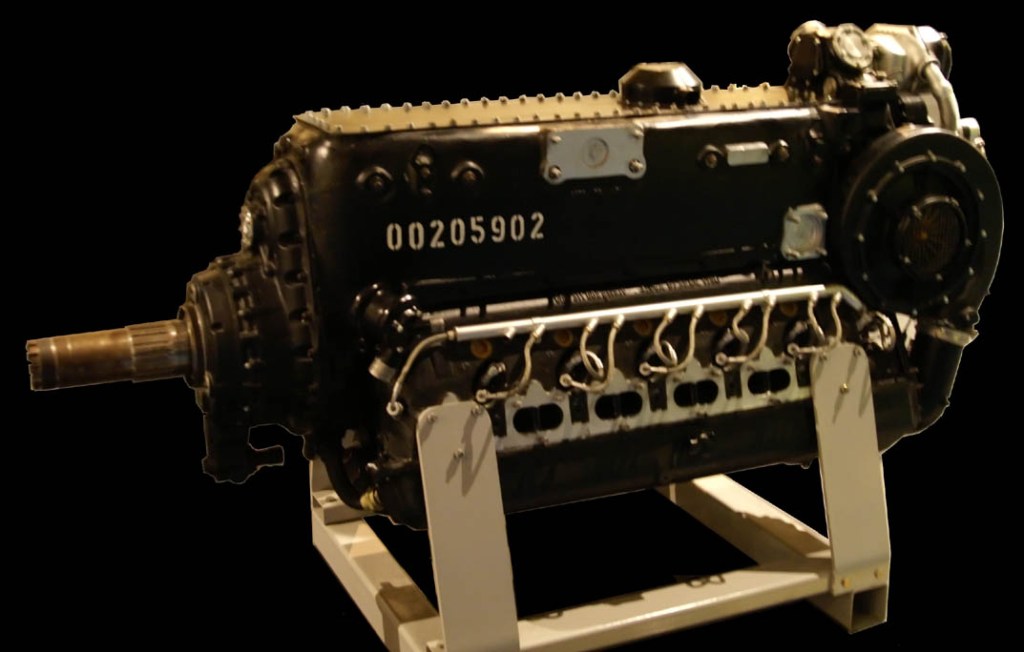
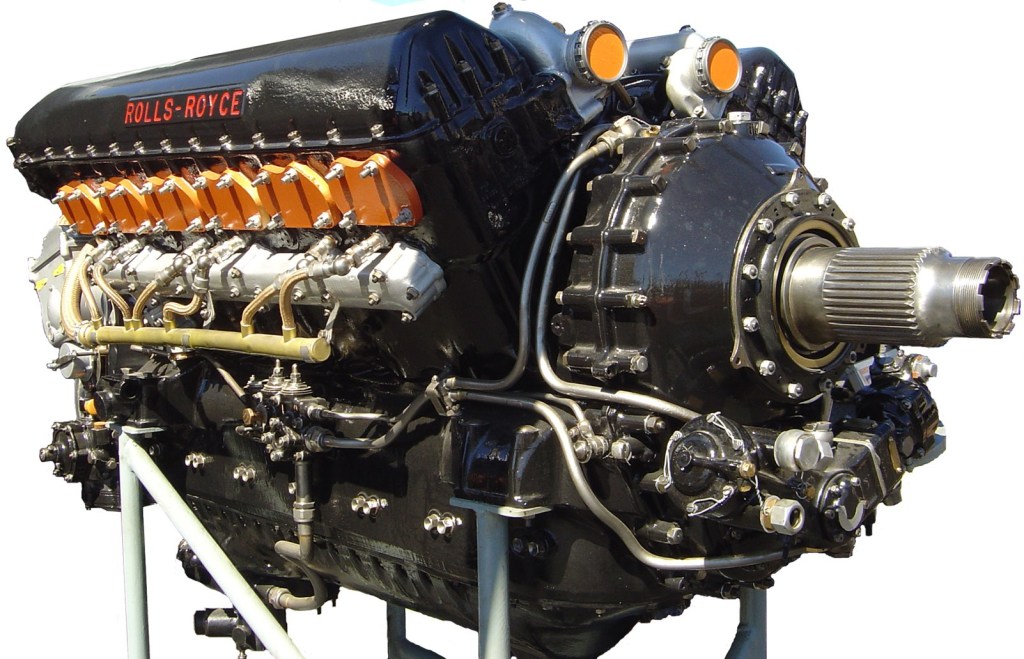
It’s great to be back at the desk, talking about my favorite nerd topics. To start things off, rather than covering an entire vehicle like the M103 Heavy tank or IL-2 Sturmovik ground attack plane, we’re going to start with a narrower more detailed look at just the engines. Specifically liquid cooled v12 engines that were common. Air cooled radial engines were common two, but that’s a different ball of yarn to untangle. The Premier inline v12s of WWII were the American built Allison C-1710, The British Rolls-Royce Merlin, the Soviet Klimov M-105 and the Fascist Option was the Daimler Benz DB-60X. The major Japanese and Italian engines with the best performance were licensed built copies of the Daimler Benz engine.
The Japanese focused more on air cooled engines than inlines, for in the early to mid thirties as technology was maturing the radial engine was simpler, lighter, and more rugged since it had not coolant, radiators of water pumps. Fewer parts to wear out, fewer delicate things to get damaged and less total weight for the same engine displacement. The ruggedness was especially important to the Japanese, as their focus being on carrier operated aircraft meant they would be without replacements, and needed the engines to remain serviceable for as long as possible without overhauls or replacements, especially under the stress of high tempo war time carrier operations.
The Italian military was trying to expand rapidly, building up a huge formidable military, land air and sea, to el duche could rebuild the roman empire. The problem was, Italy didn’t have the industrial capacity to build and support such a large mechanized military. They often chose what they could build in quantity at the time, rather than bold new machinery. Sacrificing quality, for quantity. Leaving them with inferior metallurgy and designs that were five to ten years out of date by the time they were fielded, which much like the Japanese were also often Radial engines, chosen for the sake of simplicity and ruggedness. In both the Japanese and Italian’s cases their best inline engines were licensed built copies or derivatives of the Daimler Benz engines from Germany. Personally, I think the standard for liquid cooled engines of the 1935-1945 time frame is the English built Rolls-Royce Merlin with the American built Allison a close second and the Daimler Benz a very close third behind that. The Soviet Klimov on paper is usable, but in practice they, like the Italians were certainly loosing out
on quality, in order to have quantity. Unlike the Italians, the USSR had the industrial might to play that game.
The part that makes the DB series of engines most impressive is when you have the context of the situation and that they managed to remain competitive despite the circumstances. The third Reich was starving for fuel and oil then entire war, and by the mid point were using coal, to make a synthetic sludge that the used for aviation fuel. That they could make engines run on it at all is impressive in my
opinion. That they were still able to get such performance out of said engines is truly amazing. This is another case of necessity being the mother of invention and innovation. To avoid sounding biased,below is a side by side comparison of the engines and important specs below, highlights to illustrate this point. Information is taken from 1943 Spec engines, in the middle of the war.
| R-R Merline61 | Allison 1710 | DB 605A | |
| Weight | 1640 lbs | 1385 lbs | 1642 lbs |
| Displacement | 27 L (1649 CID) | 28 L (1710 CID) | 35.7 L (2179CID) |
| Compression Ratio | 6:1 | 6.65:1 | 7.5:1 |
| Octane | 110 Octane | 130 Octane | B4 (87 Octane) |
| Power to Size | .9975 HP per CI | 0.877 HP per CI | 0.667 HP per CI |
| Boost | 25 PSI | 28 PSI | 20.6 PSI |
| Power to Weight | 1.003 HP per LB | 1.008 HP per LB | 0.886 HP per LB |
| Total Power | 1,645 HP | 1,500 HP | 1,455 HP |
| Number Built | 149,659 | 69,305 | 42,400 |
And that’s not even taking into account the water methanol injection, or the different turbo and or super charger ratios, which had a huge effect on that horsepower delivery at different altitudes, or the fuel injection vs the carburetor, or the wet sump, vs the dry sump oil reservoirs, because after all the Daimler Benz was an inverted V-12. This had lots of implications. It made the top of the cowling narrower, so it wasn’t blocking as much of the pilots forward visibility, and it made it much easier for the ground crew to work on, since commonly accessed parts like spark plugs were lower down on the air frame. But that’s a different topic for a different time. My point is, that they performed amazingly well given the circumstances, and had they access to the same Octane fuels, oils, metallurgy and bearings as the allies did, the Daimler Benz line of engines would have been even more formidable.
I would like to point out, with the low octane fuel, the DB engine was forced to run lower boost levels and have a much larger displacement. So while total weight was comparable, the physical dimensions of the engine were by necessity, larger. Because of the lower Octane fuel they were able to run higher compression without worrying over engine nock. The kept the engine, and by extension the aircraft competitive despite the huger difference in both horsepower per pound, and horsepower per cubic inch as compared to the Merlin and Allison engines.
Image credit goes to National Air and Space Museum and the Smithsonian.
https://airandspace.si.edu/collection-objects/daimler-benz-db-605-inverted-v-12-engine/
nasm_A19670086000
https://airandspace.si.edu/collection-objects/rolls-royce-merlin-rm-14sm-mk-100-v-12-engine/
nasm_A19670085000
https://airandspace.si.edu/collection-objects/allison-v-1710-33-v-1710-c15-v-12-engine/
nasm_A19420027000
https://en.wikipedia.org/wiki/Daimler-Benz_DB_605#Variants
https://en.wikipedia.org/wiki/Allison_V-1710#Specifications_(V-1710-F30R_/_-111)
https://en.wikipedia.org/wiki/Rolls-Royce_Merlin#Specifications_(Merlin_61)
https://www.enginehistory.org/Piston/Allison/AllisonSpecs/AllisonSpec183-A,V-1710-F31R(V-1710
115).pdf
https://www.enginehistory.org/Piston/Allison/AllisonSpecs/AllisonSpec178-A,V-1710-E21(V-1710
117).pdf
Thank you for your attention and patience. Here’s links to everything else we have to offer. Please help support us as we work to make real art, while we struggle against the proliferation of clanker slop.