Another Message coming through the deep space Tight Beam relay network, stand by to receive. While it loads, subscribe to get access to the archived messages and receive future updates.
If you have not seen the previous messages from Pending receipt go back to the beginning or read the previous installment here:
19
Long way home
Lev was glad to be out of his pressure suit. After nearly nine hours straight of physical labor to haul and install the power cable down the length of the umbilical. He had been inducted into Langok Station with Kirk and Spring, and now, stripped out of his pressure suit, he waited in his skin tight jump suit just outside the airlock. He was cooling quickly as the sweat from his entire body was slathered in, evaporated off him quickly in the dry air of colony station. Normally he would have looked around with interest, but he was too tired for his technical mind to wander about the place where the other half of the colony program lived.
Someone brought him water, a precious resource for the colony, he drank greedily and mindlessly, his brain too tired to process anything. The person who brought it to him, left quickly, not wanting to smell him. He wanted nothing more than to sleep. His body, so long adapted to zero gravity after all the training and the preceding part of the voyage, was not used to such physical labor. After the exertion, with the combination of exhaustion, stress, and the argument outside the airlock, his heart pounded, slamming against the inside of his ribs like a bird caught in a cage for the first time. He wanted to rest. He wanted to bathe and sleep for a week. But he knew time was precious. He fought back a yawn before taking another healthy swig of water.
But there was not a week, or days, or even hours to spare. He knew he needed to get back in his pressure suit, and get back across the umbilical to the Stalingrad. But the combination of physical and mental exhaustion made the pending task feel harder than the one he’d just completed. He looked around, but Kirk and Spring were long gone, he had no one else to ask. He didn’t know anyone else onboard Langok, and while he had technically taken the digital training and orientation lessons for the Langok station. But he didn’t remember any of it. He had completed the twelve hours of training in about two, and that was over six months ago. He had never expected to be on Langok, and he didn’t care about it.
Lev loved the Stalingrad, it was a tugboat, it was like a train. Trains were cool, but this was even cooler because it was a train in outer space. He wanted to be on a ship, not a colony cylinder getting dumped off at some not earth planet, to just sit there and do what? Live? Sounded boring. Lev wanted to keep moving, to be on a ship, to keep hauling stuff from place to place, like he had on the bulk freighters back in Earth’s orbit, before getting into the extrasolar program.
The thought hardened his heart enough to get him moving again. He took a final swig of the water and went back into the airlock, hitting the button to start it cycling behind him. The other thing he wanted was Marina, and she was back on the Stalingrad too. Lev got his tired body to move surprisingly well as he worked back into his suit. Returning to his ship, his home, his woman, motivated him, eased the weight on his shoulders and the ache in his knees. His spirits lifted as he got ready, smiling to himself as he sealed the helmet back on, not bothered by the reek of his own body as he hit the buttons on the inside to start the airlock cycle to let him out. He started typing on his wrist’s keypad, so eager to see Marina that he couldn’t wait however long it took him to walk back down the length of the umbilical.
Hey love, I’m tired, but it’s done. How’s it look on your end, are you still in the control room? He sent the message and waited eagerly as the airlock door opened before him. He stepped out into the purple haze of the transit dimension, and one foot in front of the other set off back to the Stalingrad.
He kept checking his notifications, but never got one. They had started early in their shift, even if she wasn’t on duty anymore, Marina should still be awake, why wasn’t she replying? Lev worked his lanyards around the hatch. Clipping onto the umbilical, disconnecting himself from Langok as he took the first stride of his return journey. He smiled down at the ship, and her mighty engines, giving her the power to tug around heavy loads like space stations, even if they were inefficient.
As he started his return journey, the Stalingrad looked even further away at the other end of the umbilical. He hadn’t more than twenty meters before he stopped to check his notifications again, still nothing. Lev’s second wind was short-lived. His exhaustion returned with a vengeance as he slopped around in his own juices, trapped inside the suit. After only fifty meters, he wanted to stop, he considered turning back. He opened his messages, still no notifications. Lev started typing out a second message to Marina, but after only a few characters he stopped. She was a fastidious person, and would not leave a message unanswered. If she hadn’t replied, she hadn’t seen it yet, but she would when she got to it. He deleted the message and instead typed out a new one to Chief Konstantin instead.
Installation complete, on way back. Any news? He watched the tiny display on his wrist for several heartbeats, expecting to see the little icon indicating a reply was being typed, but after several heartbeats, no reply seemed forthcoming, so he started walking again.
With his head bowed low from exhaustion, he watched his feet plod along the length of the structure, his magnetic boots making a rhythmic sound with his stride, as he paused every other step to unclip and reposition his lanyards. His feet had just crossed the meter wide band of white paint marking one hundred meters when he got a notification. He almost flinched at the chirping sound and opened the menu quickly. His heart fell, it wasn’t Marina, it was Konstantin.
Busy. Coordinating with the Governor and team on Langok. Preparing for stress test, they need time to get ready on their end. You need to hurry and get back inside so we can fire it up though. Don’t want you exposed if something goes wrong.
Lev winced reading the tiny words. Typing back furiously while rooted in place. I’ve been working on this for how long? I’m exhausted, give me a break. I didn’t even have Toya to help, like we planned. How’s Marina?
Toya is still in a coma. I’m glad you’re unaffected by the view, but not everyone was so lucky. Nothing ever goes according to plan. Now hurry up, you’re making things more, not according to plan.
He scrunched his nose inside his helmet, typing more as he walked. What about Marina?
What about her?
Where is she?
Off duty. Why?
Lev knew the rules about dating coworkers, especially while on a cruise, and realising he had overplayed his hand, hesitated on how to reply, his hand hovering mindlessly over the keypad as he lumbered on in a tired daze. He crossed another white line painted on the umbilical, indicating one hundred and fifty meters. Looking up sharply, he realized he had neglected his lanyards and had been walking untethered for nearly fifty meters. The adrenaline slapped him in the face, and he clipped his lanyard back onto the taught braided cable, and he moved with steady purpose again through the haze of exhaustion. Slightly more awake now, Lev remembered he hadn’t yet replied to Konstantin, and as he raised his arm to open the terminal again, the chirping returned, another notification arriving in real time. This time it was Marina who replied.
Sorry was eating. No new news, or at least nothing good.
So tell me the not good news, he typed out, yawning so wide inside his helmet he could taste his own sweat. Huffing, he jumped his lanyard to the next hook point, and took the next step, back towards Marina.
Toya isn’t doing well. Brain scans aren’t good, much lower than normal activity on shift engineers setting up for stress testing of your power cable.
I am surprised you’re not there helping, shift or not. He typed out with thumbs.
I tried, but they made me leave. Marina replied, Lev could feel the disappointment.
Really? They’ve been hogging after me the whole time I’ve been out here. I’m hours past my shift change, and it’s been hard work the whole time. No one told me to stop, quite the opposite.
They talked about sending Ingrid or Helena out there to help you, but after what happened to Toya, the captain is super worried about exposing people to the outside.
Brain scans that bad? He typed back as he crossed over the two hundred meter line.
The concussion is that she had a stroke, or an aneurysm, or something like that. Some of the bridge crew have been getting chronic migraines too.
They’re that worried?
We’re all worried, Lev. We have no way of knowing how many people are likely to be affected if exposed, or how bad if they are exposed now that we know the extent of the possibilities.
It’ll be okay. I was just complaining, the work is already done. I’m almost back. Can’t decide if I want to see you, or the dark side of my bunk more.
Her reply was long in coming. Long enough Lev worried if he had gone too far and upset her, but her lengthy reply finally came. No, it’s not okay. Nothing is okay. We’re trapped on the wrong side of a dimensional jump in a crippled spaceship, with not just ourselves but an entire colony station that we’re responsible for. And we can’t even risk looking outside, because whatever wavelength light this background radiation is, might literally be killing people. And on top of that, I got exposed to who knows what. So if we make it through, I’m probably looking at lung or throat cancer in a couple of years. How am I supposed to deal with that? Get permits to cross the Atlantic and somehow buy transplants from the monopolies? I know there’s a big payout at the end of this mission, but I don’t know if it’s that big. Heck, will they even let us back planet side after we’ve been exposed to the transit dimension like this?
It’ll be okay, one step, one thing at a time. Soon I’ll be back inside, and I’ll be thee, help you, take care of you. We’ll figure it out.
Take care of me? I am highly qualified, I can take care of myself. I don’t need you, I don’t have to have a man to help me, I’m no damsel in distress. Lev winced as he read her message, he had gone too far.
He didn’t reply immediately, Lev pondered his words, going over them repeatedly with his tired brain before sending his reply message. I’m not saying I’ll do it for you. I’m saying we’ll do it together. You’re very qualified, and don’t NEED me, but many hands make light work, and together, it should be easier for both of us, no?
Just… let a girl vent a little next time.
Yes ma’am.
Don’t “ma’am” me, Marina replied.
You technically are my superior. Scandalous.
Not scandalous yet, she replied. That last word, three little letters Y-E-T hit Lev like a slap across his sweaty face. What did she mean? What was she implying?
Lev found himself outside the airlock hatch. His hands too busy to reply as he unlatched the hatch and worked the commands on the keypad to start the system cycling. He needed out of this suit. His whole body itched, his subconscious screaming for him to get out of it as fast as possible. It took all of his remaining willpower not to unseal his suit and yank off his helmet as he waited for the airlock to re-pressurize.
Once the light on the door changed colors, his gloved hands fumbled frantically with the seals around the helmet, frustrating him even more before he got it off. Gasping for air, like this wasn’t the same oxygen-nitrogen mixture he had just been breathing inside the suit. He pulled the head sock off, not caring that he yanked his own hair with it, working the wrist cuffs to shuck off the gloves. He typed on his keypad, sending the message to both Chief Engineer Konstantin and Marina. Onboard.
In less than five minutes, Lev had extracted himself from his soaked suit and stuffed it back into it’s storage container. He knew he needed to clean it, and not put it away wet, but he had to clean himself first. With his portable terminal shoved in the thigh pocket of his jumpsuit, he made his way down to the washroom. His exhaustion chased away by the urge to scrub himself after hours of sweaty work.
He was stripped nude, and scrubbing himself with disposable wipes, scratching with his nails. Trying to peel off the outer layer of skin, that felt like a paste now that it had been marinated in his own juices, when his terminal chirped repeatedly as multiple notifications arrived in rapid succession. Lev paused, eyeing the terminal protruding from the pocket of his now discarded jump suit. It chirped again.
It read, Where are you? From Marina. What is taking you so long, report to the reactor control room. From Chief Engineer Konstantin. We’re going to run the stress test, get down here. Which was followed by an all hands message from Captain Mironova. You have five minutes to power down non-essential systems and be on standby for a stress test of our repairs. We’re performing a simulated dimensional jump. He checked the time, it had been ten hours since he suited up and started work to run the external cable, and he had been awake for nearly twenty hours. There were just over twenty-three hours before their jump window.
Lev swore under his breath and dressed quickly in a fresh jumpsuit. Stuffing the terminal in his thigh pocket again. Kicking down the halls, navigating the decks back down to the reactor control room. Chief Konstantin, Helena, Ingrid and Sofiya all in there with him. It was cramped, with so many people in such a small room with so many panels and monitors. Konstantin gave him a dirty look as he entered but said nothing, turning back to the terminal he was hunched over. The silence drug on as they all crowded around the terminal.
The lights flickered, and Konstantin’s shoulders sagged, Ingrid looked away, Sofia let out a choked gasp that almost turned into a sob, and Helena swore under her breath, repeating the same phrase over and over. Konstantin looked up. “It didn’t work.”
Work on the book continues now that we have feedback from ALL the beta readers, and NS-C intends to publish Book III: Knowledge of Gods around Holloween
Back Scatter
Back again for another segment of back scatter is our resident writer, Chace. Let’s see what nerdy deep dive he has this time.
Meat on the Bone
I had originally planned to return to more sci-fi related subjects like Kessler syndrome this time, but after discussing engine technology in the previous one, another topic planted itself in my craw, so instead of Kessler syndrome, we’re going to talk about one of the forgotten engine platforms, the flat head, side valve or valve in block engine design. (which, for comedic purposes, will be referred to as “VIBE” for the rest of this post.)
Before I can tell you my thoughts about them, we must first all understand what they are and the differences between them. Every engine with reciprocating pistons you’ve probably seen, be that in a car, a small airplane, a motorcycle, a weed eater, generator, a locomotive of eighteen wheeler. If it runs on gasoline, diesel, hydrogen, alcohol, propane, or whatever else, it is an OHV or overhead valve engine. Simply speaking, the pistons of an engine move up and down inside the cylinders of the engine block. The cylinder head is bolted on, over the top of the pistons, and the valves are integral to the cylinder head. There’s a few different methods for activating the valves, be that overhead cams, or push rods and rocker arms, but that’s not important right now. What matters for the definition is that the valves are in the cylinder head and extend downward into the cylinder cavity, hopefully when the piston is moving downward and then the valves retract or close under spring pressure.
In a Valve in block engine or VIBE engine, there is a flat space at the top of the cylinder next to the piston where the valves are located, and they extend upward into this dead space next to the piston, regardless of piston location, and they too are closed under spring pressure. This is why side valve of VIBEs are often referred to as “flat heads” though technically flat head refers to a specific ford V8, it is commonly applied to all VIBEs as without the valves in the cylinder head, the head serves only as a flat plate to seal off the top of the cylinders, creating a proper combustion chamber.
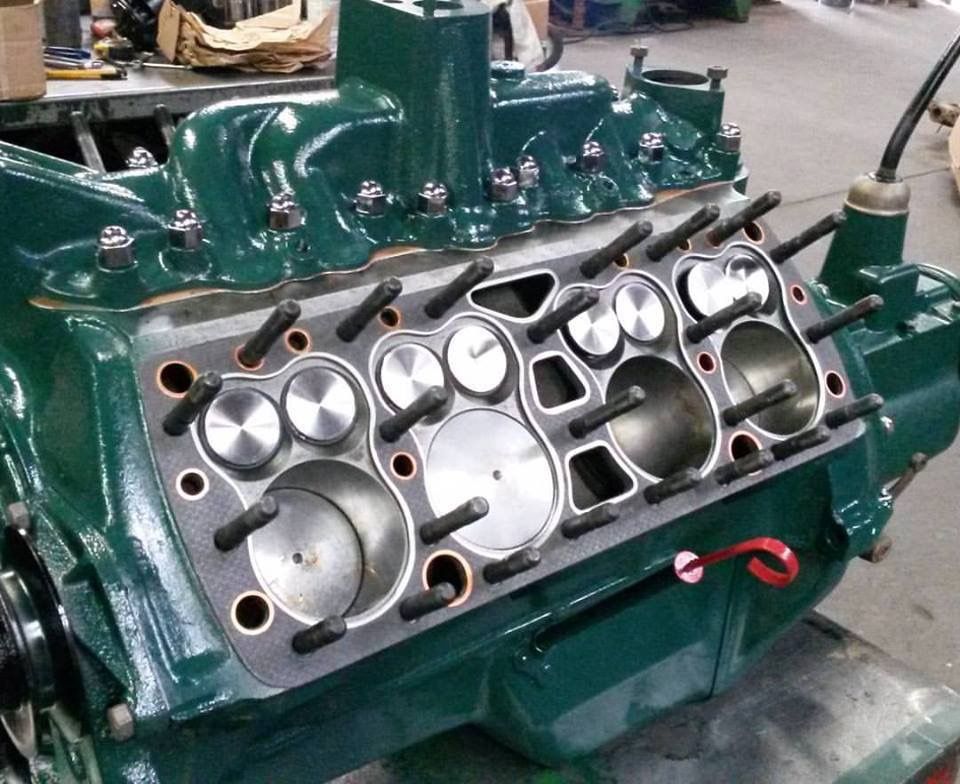
I’m going to start with all the advantages of VIBEs, to front load my biases and get you on my side when this inevitably devolves into an argument in the comments below. For starters, as I already said, the cylinder head is very simple, needing only holes for mounting studs and the spark plugs. Making them very simple and cheap to manufacture. And cheap and easy is usually good, right? I mean, just look at my Ex…
Because the valves are in a block, they have a lifter between the valve and the cam, and that’s it. Where as an OHV not only had the larger more complex, more expensive cylinder head but the valves are farther away and facing one hundred eighty degrees the other direction, so they require more parts to operate. More parts means more weight, more complexity, more failure points, more cost, more stacking tolerances. A pushrod OHV engine, while it still has the cam in the block, then requires not just lifters, but push rods, rockers, bolts to mount those rockers, and a valve cover bolted on over the top of all that. That’s a lot of extra parts. If not a pushrod engine, and instead an overhead cam engine, the valves in the cylinder head stay the same, but the cam and lifters instead of being in the block now sit on top of the head too, also under the valve cover. This makes the engine even taller adding the height of the cam and its mounting bolts to the top of the cylinder head. And in V8 or V6 engines, that means each cylinder head needs its own cam. So now there’s the extra size and weight of not just one, but two cams, two valve covers, and two drive belts or chains from the crank to actuate and keep the timing of those cams, again, another failure point rather than having the cam directly driven by a gear off the crank like with the venerable Ford 4.9L straight six which had nearly thirty years of uninterrupted production and served in far more roles than just as an automotive engine. Though with overhead cams, you could also use a dual overhead cam system, allowing not just two valves per cylinder with one intake and one exhaust valve, but four valves per cylinder, two intake and two exhaust. And this lets you get air into and out of the engine faster, theoretically meaning more power, but this also means two cam shafts per cylinder head. In the V8 and V6 examples previously mentioned, that would mean not two but four cam shafts per engine, which add that much more weight, timing complexity and in creasing parts count, raising the overall cost to manufacture not just physical dimensions of the engine.
All this complex assembly just to actuate the valves in one way or another, gives the VIBE another advantage, as I alluded to before, with the valve assembly and valve cover on top of the cylinder head those add a lot of vertical height to the engine, and overhead cam types even more than push rod engines. Meaning the VIBE is physically smaller. The Flathead has a smaller vertical height between the top of the cylinder head to the bottom of the oil pan beneath the crankcase, because it doesn’t have all of those parts to actuate and cover the valves on top of the heads.
Lastly, all those parts I just mentioned that add size, and weight, and cost also add complexity. As I mentioned, the number of parts and the stacking of the tolerances between all those parts means the extra failure points, by definition, make the simpler VIBE system more reliable, a lighter complete assembly and cheaper to manufacture, sounds pretty good doesn’t it? If is cheaper, smaller, and more reliable, why doesn’t everyone use the VIBE layout?
Well, let me tell you. OHV engines, for starters, breathe better. Remember when I said the VIBE had their valves in a small flat area next to the piston? That means airflow in or out of the cylinder through the valves must make a sharp ninety degree through the valve into the combustion chamber. This slows the airflow and reduces the total amount of air you can get in and out of it. Meaning maximum power potential is limited compared to an OHV where the air simply flows down and in through an intake valve or up and out through an exhaust valve with much less change in the direction of airflow. This small flat area next to the cylinder where the valves are increases the volume of the combustion chamber. Meaning that the maximum compression ratio is severely limited, which in turn means again lower efficiency and lower maximum power. This enlarged combustion chamber also means that it’s physically impossible to have a diesel VIBE.
The last and one of the most obvious of problems when you actually use or interact with a VIBE engine in a physical sense is the overheating. In V pattern engines, like the famous Ford flathead V8, because the valves are all buried inside of the block, instead of up in the cylinder head. Including the exhaust valves. Engine exhaust gases are hot, and the exhaust valves buried in the engine block are going to soak a lot of heat into the engine block, and in the V8 pattern like the flat head, the exhaust, after leaving those valves, the hot exhaust gases are routed through the block between the cylinders. This means several things. Not only is that dumping all the exhaust heat into the block, meaning the engine runs hotter, and you have to increase the capacity of the cooling system to compensate and keep the engine at a normal operating temperature, but now all this heat is also concentrated into the thin area between cylinders. This is extra stress on the metal and can cause failures, like cracks in the block in these areas, especially around the holes where the studs are inserted. This may cause premature failure in the middle of lifespan of an otherwise healthy engine.
So those are kind of big downers. Flathead or VIBEs were in production from the beginning, way back in the 1890s, but by the late 1950s they were being steadily outclassed by the OHV engines and by the 1960s were out of production. But if side valve engines existed for longer than they have been out of mass production, why are there not more of them still around, and why are they not better known?
Well, as manufacturing technology increased, these complex OHV engines got cheaper to make and more reliable as tolerances got tighter and variance between individual parts got smaller too, letting the engines become more and more modular. Much like the straight eight pattern engine that went extinct in the 1950s, the newer OHV engines were more efficient and more powerful. Once these advances in manufacturing, machining technology and metallurgy made the OHVs more reliable and more comparable in price, capitalism took over and the overhead valve pattern engines eclipsed the VIBEs.
And it was in the late fifties when this occurred, and by the early 1960s the VIBEs were out of production, but engine technology has come a long way since the 1960s. We no longer use carburetors, points, or even distributors, for that matter. So my thinking was, and the reason I named this article “meat on the bone” was because what if we applied these advancements gained from decades of iterative evolution of overhead valve engines to the older, simpler, side valve format? I am fully aware because of the limitations I have already listed above, that a VIBE will never be able to compete in terms of power, compression or efficiency when compared to an OHV when we add the same external features like fuel injection, or tighter tolerances and modern bearings and oils. But bear with me my thinking is, you never know what something will derive. For example, there are many technologies we hold commonplace in our lives today that, if we go back to the 1960s when you could still buy a flat head, didn’t exist yet, and all of those were derived and filtered down to use filthy civilians by NASA for the space race in the 1960s, 70s and 80s. So my theory is, by, even if it’s not logical or economical to try and develop modern, advanced side valve engines, we might learn something, and that thing we learn might be more powerful or valuable than anything so commonplace and simple as reciprocating internal combustion engine.
Let me lay out my thought experiment to you real quick. The main reason OHV engines can make more power is because of the airflow in their valves and the ability to have four valves per cylinder. While we can’t change the airflow through the valve, what if we increased the number of valves from two to four? While I don’t know if it’s possible in a V8 or V6 pattern engine like the famous Ford Flathead V8, but with inline engines like a straight six or an inline four, you could have a second cam shaft on the other side of the block, to drive the second set of valves, just like the dual overhead cam set up engines. But still without the added vertical size of a dual overhead cam OHV pattern engine. Making the engine shorter, and because of the necessary intake and exhaust manifolds the added width of the block to have two cam shafts, won’t be adding any horizontal size to the block either, at least not in the sense that it requires a larger engine bay. So, to use the straight six as an example. A four valve per cylinder two cam in block pattern VIBE straight six of a given displacement will be physically smaller by a moderate margin when compared to a DOHC OHV of the same displacement, for example, the Toyota 2JZ engine. While length and width would stay roughly the same, the VIBE could be four to eight inches shorter on the vertical axis, allowing for smaller and lighter installations.
There’s many other things too, not just fuel injection, variable valve timing, multiple spark plugs, or some crazy stuff like laser detonation and turbulence grooves inside the combustion chamber for better fuel air charge mixing and so on. Personally, in my writing, I find I am most creative when I add constraints to myself. If someone were to constrain themselves to a side-valve engine, they may have some creative solutions to the problems inherent in the platform, and those creative solutions might just be new, industry revolutionizing technologies. Who knows what we may find, but with some creative ideas, we might figure out how to get more meat off the bone.
Thank you for your time and attention, if you enjoyed this, please subscribe for more, and check out our previous posts or full length novels and audio books using the buttons below.